
The Iranian Embassy in South Africa has launched a biting social media attack on US President Donald Trump, using a viral maritime audio clip to label him an "idiot".

Iran has strongly rejected former US President Donald Trump's assertion that the Strait of Hormuz is 'NEW U.S. TERRITORY', with top officials warning that his 'delusions' would be 'corrected' and highlighting the gap between Washington's claims and its actual influence over the strategic waterway.

Iran's Islamic Revolutionary Guard Corps (IRGC) has claimed responsibility for missile and drone strikes on US military installations in Bahrain, describing the operations as the second phase of its retaliatory campaign. This announcement follows US Central Command (CENTCOM) confirming its own large-scale offensive targeting Iranian military infrastructure.

The US on Monday announced that it had revoked more than 1.75 lakh visas during President Donald Trump's tenure for a range of crimes from reckless driving to sexual assault.

US President Donald Trump stated that the United States is taking a "low-key" approach towards Iran, focusing on economic pressure rather than military action, amidst ongoing tensions over the Strait of Hormuz. Trump highlighted Iran's worsening economic situation and the impact of the US naval blockade, while negotiations for reopening the Strait remain stalled due to new conditions from Tehran.

The United States has launched a fresh wave of precision strikes, hitting approximately 90 Iranian military targets deep inside Iran, further intensifying a rapidly expanding regional conflict, with Tehran warning of severe retaliation.

Iran's Islamic Revolutionary Guard Corps (IRGC) asserted full control over the Strait of Hormuz, claiming two oil tankers turned back after a fire, and warned countries supporting the US against interference in the strategic waterway.

Lieutenant General Apti Alaudinov, deputy chief of the Russian Armed Forces' Main Military-Political Department, has warned that the escalating conflict in West Asia could lead to Israel ceasing to exist as a state, accusing Israel of seeking to widen the confrontation to involve the US and NATO.

US President Donald Trump has declared the ceasefire agreement with Iran effectively concluded, stating he no longer wishes to engage in diplomatic dealings with Tehran and labelling Iranians as 'liars, cheats and sick people' following recent military actions.
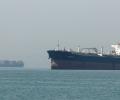
As tensions in the Middle East approach a critical juncture, reports have surfaced regarding a draft memorandum of understanding between the United States and Iran aimed at de-escalating the ongoing conflict, Iranian state media reported on Wednesday.

Falling debris from an intercepted Iranian drone caused a 'limited fire' at Saudi Aramco's Ras Tanura refining facility in Saudi Arabia, Saudi Defence Ministry spokesperson Turki Al-Maliki said, according to Al Arabiya.

Iran's Islamic Revolutionary Guard Corps (IRGC) has launched missile and drone strikes on four US military bases in Kuwait and Bahrain. This action is in retaliation for recent American strikes against targets in Iran, which the IRGC condemned as a "violation of commitments" and an "anti-civilian act." The IRGC has warned of an expanded "crushing response" if US aggression continues.

The US Navy seized an Iranian-flagged cargo ship in the Gulf of Oman, escalating tensions as ceasefire talks face uncertainty. The incident raises concerns about the fragile ceasefire and the ongoing blockade of the Strait of Hormuz.

Amid rising tensions, Iran threatens retaliation after the United States confirms sinking its warship, IRIS Dena, in international waters, escalating conflict in the region.

Iranian military spokesperson said that stability in the region would be ensured only by the strength of Iran's armed forces and warned that energy and oil markets would not return to previous levels unless this reality was acknowledged.

Fighting in Yemen has intensified as Houthi rebels advance on strategic government-held areas like Marib and Taiz, putting pressure on Saudi Arabia to respond. The conflict is also linked to wider US-Iran tensions affecting shipping in the Strait of Hormuz, with former US President Trump commenting on the situation.

Pezeshkian urged American citizens to look beyond 'manufactured narratives', claiming the portrayal of Iran as a threat is driven by the military-industrial complex and Israeli political interests.
US President Donald Trump has announced the cancellation of a planned attack on Iran, contingent on Tehran agreeing to rapidly open the Strait of Hormuz and end its nuclear programme. This decision follows appeals from Middle Eastern countries and includes Israel's commitment, though Iran had previously warned against any "adventurous action" from the US.

Iranian Parliament Speaker Mohammad Bagher Ghalibaf stressed on Friday (local time) that Tehran remains prepared for "full-scale defence" should the US betray the Memorandum of Understanding signed by the two countries last month.

The central headquarters of the Iranian armed forces has issued a stark warning to the United States and its regional partners following recent threats made by President Donald Trump, state broadcaster Press TV reported.

Torn between loyalty to their comrades and disillusionment towards the cause for which they are fighting, they are beginning to cave in. Morale has been the casualty, points out Vice Admiral Biswajit Dasgupta (retd).

The Israel Defence Forces (IDF) have conducted a massive military operation targeting more than 200 infrastructure sites within Iran and an additional 140 Hezbollah assets across Lebanon.

Malicious cyber activity has disrupted technology at water and wastewater facilities in at least seven US states, forcing utilities to revert to manual operations, with authorities actively probing whether Iranian-linked hackers are responsible.

A US Air Force officer was rescued from deep inside Iran after his jet was shot down, following a two-day mission involving US Special Operations forces. The officer evaded Iranian forces for over 24 hours, hiding in a mountain crevice and hiking to high altitudes before being rescued.

Iranian Foreign Minister Seyed Abbas Araghchi has warned the United States that Iran is ready to confront American troops if the US launches a ground invasion, calling such a move a potential 'big disaster' for Washington.

At least 101 people are missing and 78 are injured after a suspected submarine attack on an Iranian naval ship off Sri Lanka's southern coast on Wednesday, Reuters quoted sources in Sri Lanka's Navy and defence ministry as saying.

US President Donald Trump has abruptly withdrawn from a peace deal with Iran, citing fresh intelligence of Iranian assaults on commercial vessels in the Strait of Hormuz. The decision, made just a fortnight after celebrating the deal, has led to a significant military escalation in the region, with the US launching extensive counter-operations against Iranian military infrastructure.

Last Man In Tower is an unsettling portrait of a society that can turn against one another when greed dangles the promise of a better life, observes Sreeju Sudhakaran.

Hours after US President Donald Trump on Wednesday said that the ceasefire deal with Iran was "over", the US President indicated that Washington could launch another round of strikes against the Islamic Republic, following strikes on Tuesday, saying it had already hit Tehran "very hard" and warning of further attacks.

'The Chinese military cannot advance much in Ladakh, even if they want to.' 'Similarly, in Arunachal Pradesh, they can rename a village or two, intrude here or there, but cannot do much more realistically.'
Former US President Donald Trump stated that Gulf nations should reimburse the United States for safeguarding maritime traffic through the Strait of Hormuz, while asserting that recent American military interventions have profoundly crippled Iran's military capabilities, claiming Iran has been "brought back to the Stone Ages."

The United States conducted retaliatory strikes against Iran, targeting over 80 sites, after accusing Tehran of attacking commercial vessels in the Strait of Hormuz, while Iran condemned the US decision to revoke a temporary suspension of sanctions on Iranian oil sales.

Donald Trump announced he is replacing the 20% reimbursement fee for securing the Strait of Hormuz with massive trade and investment deals from Gulf States into the United States, while maintaining a full blockade on Iranian ship traffic.

US President Donald Trump has claimed that Iran has accepted "just about everything" the United States has demanded in ongoing indirect nuclear negotiations, particularly regarding denuclearisation. He also asserted that American forces repeatedly carried out military strikes that crippled Tehran's military infrastructure, including radar installations, and escorted commercial oil tankers through the Strait of Hormuz. Trump dismissed reports of Iran's strength, stating its military and economy were severely weakened.

Russia has expressed strong concern over a US-Israeli strike on the Iranian port of Bandar Anzali, a key transit hub on the INSTC, warning of the risk of drawing Caspian states into the ongoing conflict.

Instead of pride, many Iranian-Americans feel shame about the Iran team's participation in the World Cup and are demanding that FIFA boots the country out of the competition, protesters said in Los Angeles on Wednesday.

The Sri Lanka Navy rescued 32 Iranian sailors from a sinking naval ship off the southern coast, while also recovering several bodies. The incident occurred outside Sri Lankan waters but within its search and rescue zone.

US President Donald Trump claimed on Tuesday that Tehran has consented to long-term, comprehensive monitoring of its nuclear infrastructure. Concurrently, Washington will ease shipping constraints in the Strait of Hormuz and release bound financial concessions, subject to stringent American oversight.

Iran's Islamic Revolutionary Guard Corps (IRGC) on Thursday claimed it had struck the US Al-Azraq air base in northern Jordan with 10 ballistic missiles on what it described as an "enemy command and control centre in West Asia" in retaliatory strikes in response to a recent attack on Tehran by Washington.

Popularly known as 'Little India', Dimona has a large Indian-Jewish population, and the community members, mostly from the state of Maharashtra, maintain strong links with India and have consistently put efforts to solidify them.
